
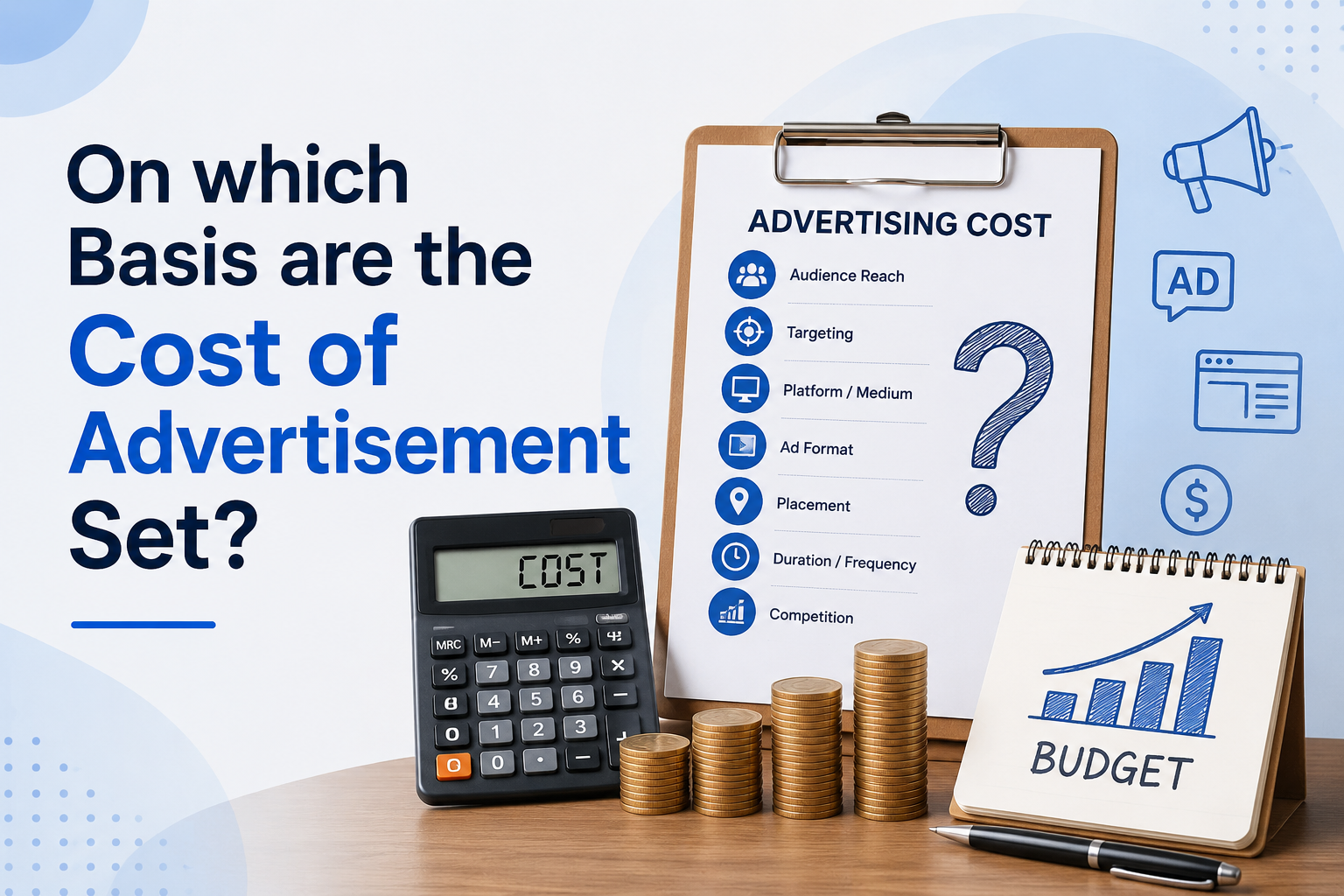
On which Basis are the Cost of Advertisement Set?
Advertising plays an important role in helping businesses promote products, services, and brands to the right audience. However, advertising costs can vary greatly depending on several factors such as the advertising platform, audience reach, competition, ad placement, and campaign duration. Understanding on which basis the cost of advertisement is set helps businesses plan budgets more effectively and choose the right advertising strategy. Whether it is television, newspapers, digital ads, radio, or outdoor advertising, every advertising medium follows different pricing structures based on visibility, audience engagement, and demand.
Basis on Which Advertisement Cost is Set
Advertisement costs are determined using multiple factors that influence the reach, effectiveness, and visibility of a campaign. Businesses usually set advertising budgets depending on their marketing goals, target audience, and chosen media channels. Below are some of the major bases on which advertisement costs are set.
1. Media Channel Selection
The advertising medium is one of the biggest factors affecting cost. Different platforms have different pricing structures.
For example:
- Television advertising is usually expensive because of its wide reach.
- Newspaper advertising costs depend on circulation and placement.
- Digital advertising may charge based on clicks, impressions, or conversions.
- Outdoor advertising costs depend on location and visibility.
The choice of platform directly impacts the overall advertising budget.
2. Ad Placement and Positioning
Where the advertisement appears also affects pricing.
Premium placements usually cost more, such as:
- Front-page newspaper ads
- Prime-time television slots
- Homepage website banners
- High-traffic billboard locations
Better placement generally increases visibility and audience attention, which raises the advertising cost.
Also Read: Billboard Advertising Cost
3. Audience Demographics and Reach
Advertising costs are often based on the type and size of audience being targeted.
Campaigns targeting:
- High-income audiences
- Urban consumers
- Business professionals
- Niche customer groups
usually cost more because advertisers are competing for a specific audience segment. Wider audience reach often increases advertising expenses as well.
4. Ad Format and Creative Requirements
The type of advertisement also influences cost.
Simple text advertisements are usually more affordable, while creative formats such as:
- Video advertisements
- Interactive ads
- Animated campaigns
- Large display creatives
require higher production and design costs. Complex campaigns generally involve additional expenses for production, editing, graphics, and media adaptation.
Also Read: How to write an Advertisement
5. Industry Competition
Advertising prices increase in highly competitive industries.
Industries such as:
- Real estate
- E-commerce
- Finance
- Education
- Consumer electronics
often spend heavily on advertising, increasing competition for premium ad space and keywords. This is especially visible in digital advertising platforms where bidding systems affect ad pricing.
6. Seasonal Demand
Advertising costs may rise during high-demand periods.
Examples include:
- Festive seasons
- Election periods
- Holiday sales
- Major sporting events
- New product launches
During these periods, demand for advertising space increases, which raises pricing across platforms.
7. Ad Duration and Frequency
The length and repetition of a campaign also determine advertising cost. Longer campaigns usually require higher budgets. Similarly, advertisements shown repeatedly to audiences increase total campaign expenses. Businesses often balance frequency and duration to maximize visibility while controlling costs.
Pricing Models to Calculate Campaign Cost
Advertising platforms use different pricing models to calculate campaign costs. Common pricing methods include:
| Pricing Model | Meaning |
| CPM | Cost per 1,000 impressions |
| CPC | Cost per click |
| CPA | Cost per acquisition or conversion |
| Fixed Pricing | Fixed cost for a specific ad space or duration |
The selected pricing model affects how businesses spend and measure advertising performance.
Also Read: Best Advertising Platforms
Factors Influencing the Cost of Advertising
Several external and internal factors influence advertising costs across industries and platforms.
- Target Audience: Highly targeted campaigns generally cost more because advertisers are paying to reach a specific consumer group.
- Platform Popularity: Popular advertising platforms with high audience engagement often charge higher advertising rates.
- Competition in the Market: High competition for ad space or digital keywords increases pricing significantly.
- Creative Quality: Professionally designed advertisements may improve performance but also increase production expenses.
- Geographic Location: Advertising in metro cities or premium markets usually costs more than regional or local advertising.
- Campaign Objectives: Brand awareness campaigns may require large reach, while performance campaigns focus more on conversions and measurable results.
- Technology and Automation: Advanced targeting tools, AI-driven campaigns, and automated bidding systems may influence digital advertising costs.
Conclusion
The cost of advertisement is set based on several factors including media selection, audience targeting, placement, competition, creative format, and campaign duration. Every advertising platform follows different pricing methods depending on the visibility and engagement it offers. Understanding these factors helps businesses plan advertising budgets more effectively and select platforms that align with their marketing objectives. By balancing reach, targeting, creativity, and budget, businesses can improve advertising performance and maximize return on investment.
FAQs
Q1. What determines the cost of an advertisement?
Answer: The cost of an advertisement is determined by factors such as media platform, audience reach, placement, competition, campaign duration, and ad format.
Q2. Does audience targeting affect advertisement cost?
Answer: Yes, highly targeted audience campaigns usually cost more because advertisers compete to reach specific customer groups.
Q3. How does the advertising platform influence pricing?
Answer: Different platforms have different pricing structures. Television, digital platforms, newspapers, radio, and outdoor advertising all calculate costs differently based on reach and demand.
Q4. What are the common pricing models used in advertising?
Answer: Common pricing models include CPM (cost per thousand impressions), CPC (cost per click), CPA (cost per acquisition), and fixed pricing models.
Q5. Does ad placement affect advertising cost?
Answer: Yes, premium placements such as front-page ads, prime-time slots, and high-traffic billboard locations generally cost more.
Q6. How does competition influence advertisement cost?
Answer: Higher competition increases demand for advertising space and keywords, which raises advertising prices.
Q7. Does ad quality affect the price of advertising?
Answer: Yes, high-quality creative advertisements may involve additional production and design costs.
Q8. Can businesses control their advertisement budget?
Answer: Yes, businesses can control spending by selecting suitable platforms, targeting the right audience, adjusting campaign duration, and choosing cost-effective advertising formats.